
- Abdellatif - Ouirgane Local Guide
- +212 672 47 02 31
- contact@ouirganeguide.com

Autumn Mount Toubkal Trekking: A Practical Guide for September and October

Toubkal National Pak : A Natural heritage
January 19, 2019
Mount Toubkal Altitude Safety: Acclimatization Tips for a Safer Trek
September 7, 2026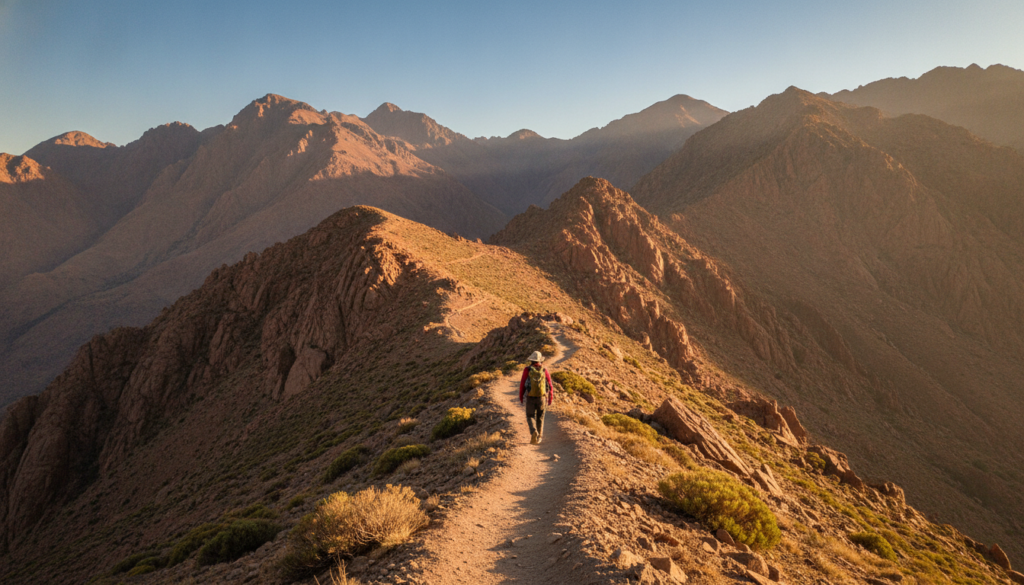
Planning a Mount Toubkal trek in autumn? September and October can offer crisp air, clearer mountain views and comfortable walking temperatures, but a successful summit attempt depends on more than choosing a popular month. You also need a realistic itinerary, time to acclimatise, the right equipment and a flexible plan for changing mountain weather.
This practical guide is for travelers deciding whether to add Toubkal to a Morocco trip, and for walkers who want to prepare responsibly. It also explains why spending time in the Ouirgane Valley can be a useful, gentler start to a High Atlas adventure.
Why autumn is a strong season for Mount Toubkal
Live search results for “best time to climb Toubkal” consistently focus on September and October because the summer heat is easing and winter snow is not usually the main feature of the standard route. Conditions are never guaranteed, however. Wind, storms, cold nights and early snow can arrive quickly at altitude, so treat seasonal advice as a planning guide rather than a promise.
Autumn is also a good time to look beyond a rushed summit. If the forecast or your energy levels are not right, the High Atlas offers rewarding valley walks and village-to-village routes. See our two-day Atlas Mountains trek from Ouirgane for a lower-pressure alternative.
Start with acclimatisation, not the summit
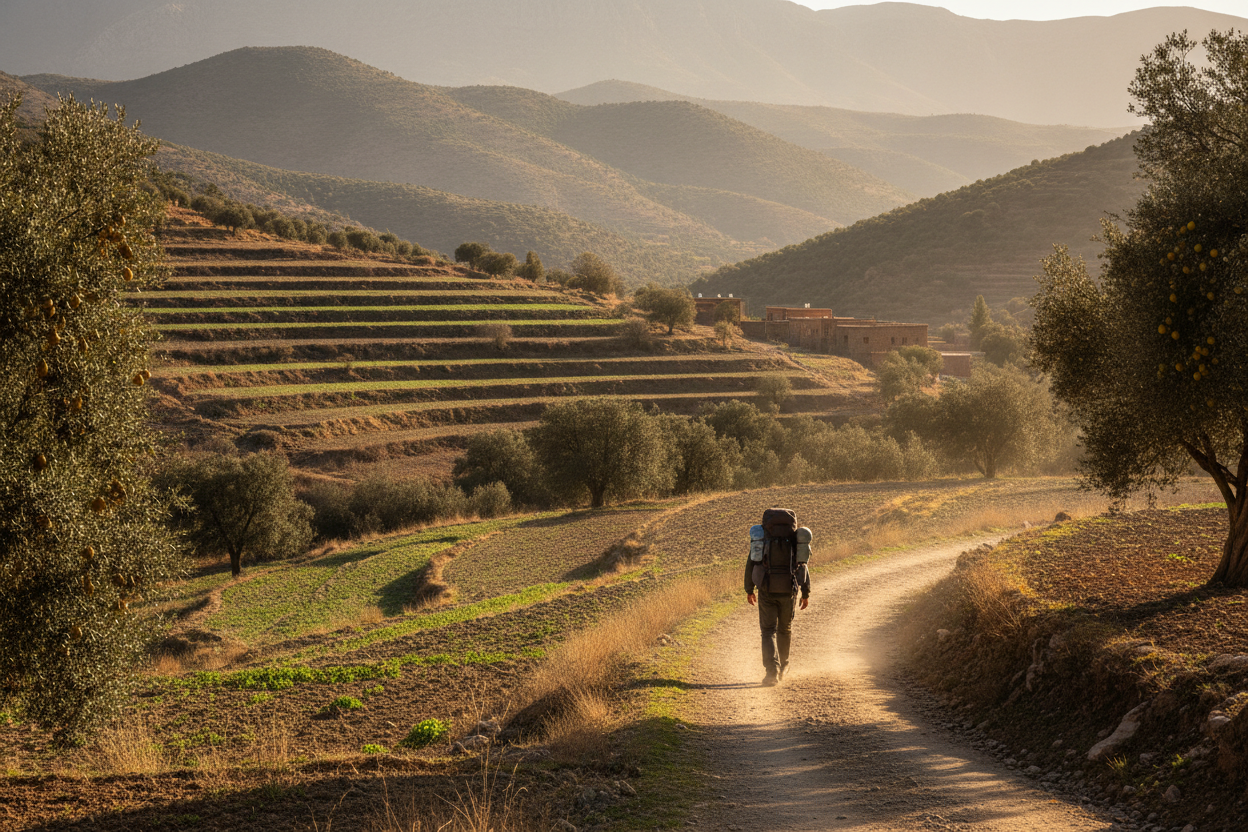
Arriving in Marrakech and immediately attempting a high ascent is a common planning mistake. Build in an easier walking day first, drink regularly, eat enough and pay attention to how you feel. Ouirgane is a useful base for quieter valley walking and for meeting a local guide before committing to a higher route.
Acclimatisation is individual. Headache, nausea, unusual tiredness, dizziness or poor coordination should be taken seriously. Tell your guide, stop ascending and descend if symptoms worsen. Do not treat altitude illness as something to push through for a photograph.
Choose an itinerary that matches your time and fitness
The classic Toubkal approach is usually planned over several days, with time to reach the mountain villages and a high refuge or camp before an early summit attempt. A short itinerary may suit experienced trekkers with limited time, but it leaves less room for acclimatisation or weather changes. A longer journey is often more enjoyable because it lets you walk at a steadier pace and experience the valleys rather than only chasing the highest point.
- For a first High Atlas trip: include a gentle Ouirgane or Imlil walking day before the summit route.
- For limited time: ask a local guide to assess whether a shorter Toubkal itinerary is appropriate for your group.
- For a more immersive holiday: compare the five-day Ouirgane to Imlil trek with a summit-focused plan.
- For a lower-altitude backup: consider a village walk, the Azaden Valley or an Ouirgane excursion if conditions change.
What to pack for an autumn Toubkal trek
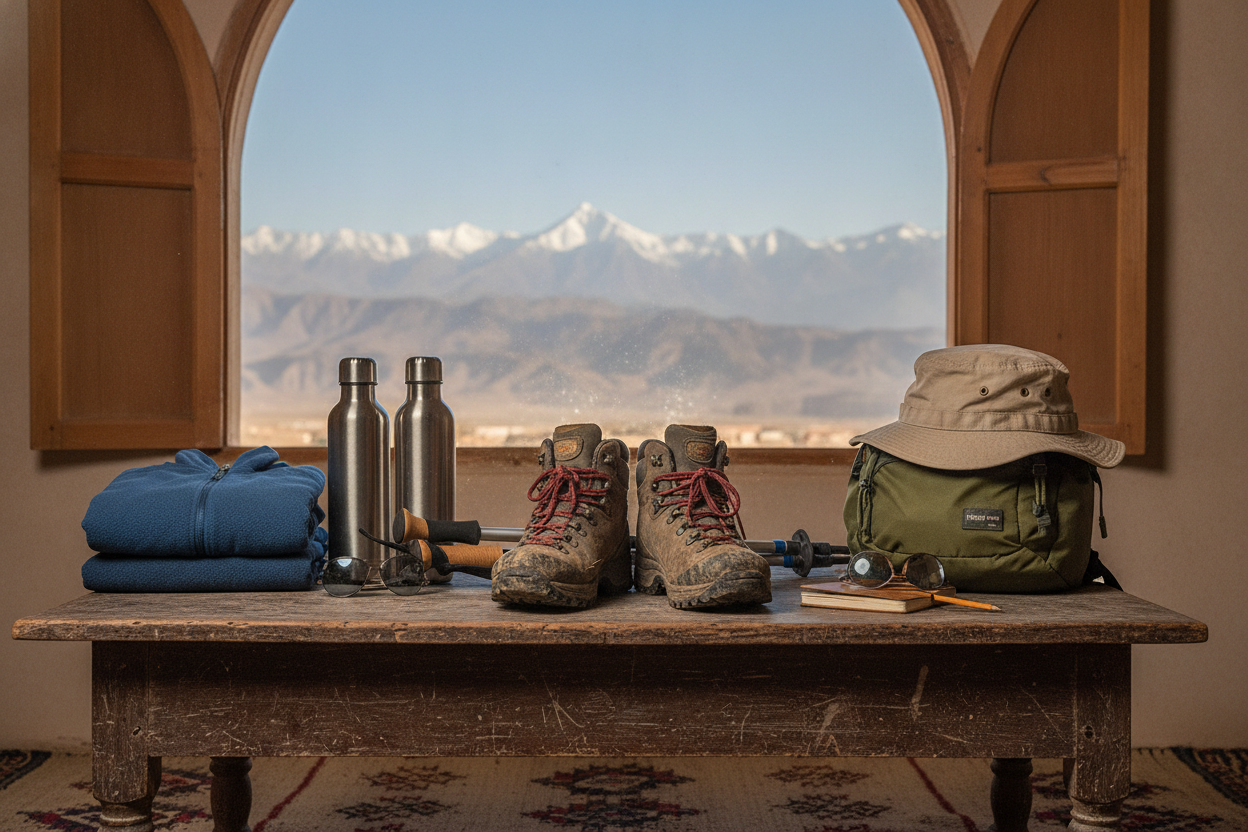
Mountain temperatures can vary sharply between a sunny afternoon and a windy summit morning. Pack for layers, not for one forecast number.
- Broken-in hiking boots with dependable grip and comfortable walking socks.
- Base layers, a warm mid-layer, a waterproof or windproof shell, gloves and a warm hat.
- Sun protection: sunglasses, high-factor sunscreen and a brimmed hat.
- Reusable water bottles or a hydration system, plus snacks with carbohydrate and salt.
- Head torch, small first-aid kit, blister care, personal medication and power bank.
- Trekking poles if you normally use them, especially for long descents.
- Small daypack and a dry bag for clothing and electronics.
Ask your guide or accommodation provider what is included before you travel. Kit needs can change if snow or icy ground appears, and technical winter equipment should only be used with suitable knowledge and advice.
Summit day: pace, weather and safety
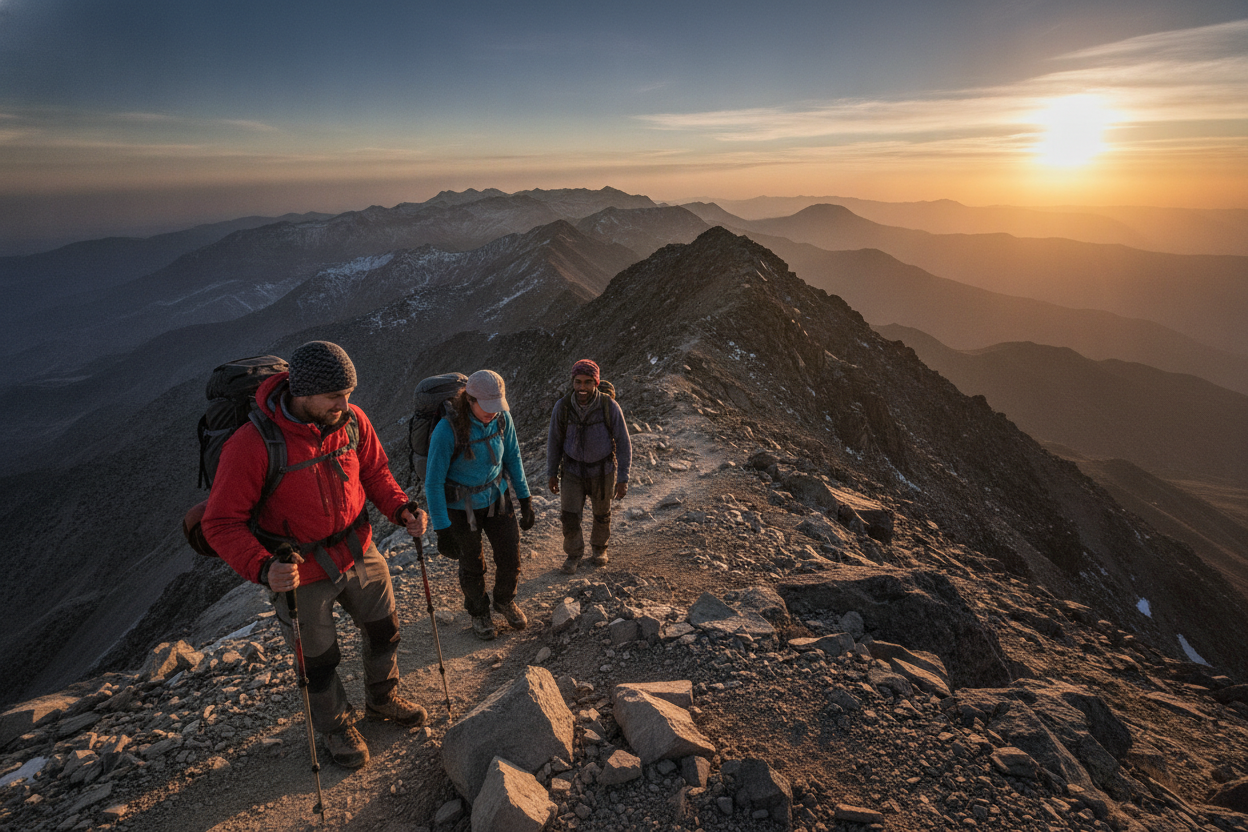
Summit day normally starts early to allow a steady ascent and a safe return. Eat a simple breakfast, keep your pace conversational and take short, regular breaks. The descent can be harder on tired legs than the climb, so save energy and do not let excitement turn the final hours into a race.
Use a qualified local guide who knows the route and current conditions. Follow the agreed plan, stay with your group and turn around when the guide judges that the weather, visibility, snow or your condition makes continuing unsafe. Mountain access and refuge arrangements can change; confirm current logistics locally rather than relying on an old blog post or a fixed online itinerary.
Travel more responsibly in the High Atlas
Walking holidays are also community visits. Buy food and services locally, ask before photographing people, dress respectfully in villages and carry your rubbish out. Use refill points where safe, avoid single-use plastic and keep to established paths when possible. A guide can help you understand local customs as well as navigate the trail.
If you would prefer to combine walking with local food and culture, explore our Ouirgane Berber cooking experience. For questions about routes, dates or group needs, contact our local team before booking.
Quick answers for autumn Toubkal planning
Is September or October better for Toubkal?
Both can be excellent, but neither is automatically safe or snow-free. September may feel warmer at lower elevations, while October can bring cooler nights and changing conditions. Choose based on the current forecast, your itinerary and your guide’s local assessment.
Do I need previous mountaineering experience?
The standard summer or early-autumn walking route is not the same as a technical climbing expedition, but it is still a demanding high-altitude trek. Fitness, preparation and sensible pacing matter. Snow and ice can change the skills and equipment required.
Can I trek Toubkal without a guide?
Route conditions, weather, local arrangements and group safety all matter. A qualified local guide is strongly recommended, particularly for first-time visitors, changing conditions or anyone unfamiliar with the Atlas Mountains.
What if the summit is not possible?
A summit is not the only successful outcome. A safe valley trek, time in Ouirgane or an adjusted itinerary can still become the highlight of your Morocco holiday. Plan with flexibility and respect the mountain.
Plan your Morocco walking holiday with local insight
Mount Toubkal is a memorable goal, but the best trip is one that leaves room for acclimatisation, local connection and good decisions. Start gently, prepare for cold and changeable conditions, and choose an itinerary that fits the people traveling with you. Browse our Atlas Mountains trekking experiences or return to the Ouirgane guide homepage to begin shaping your route.
